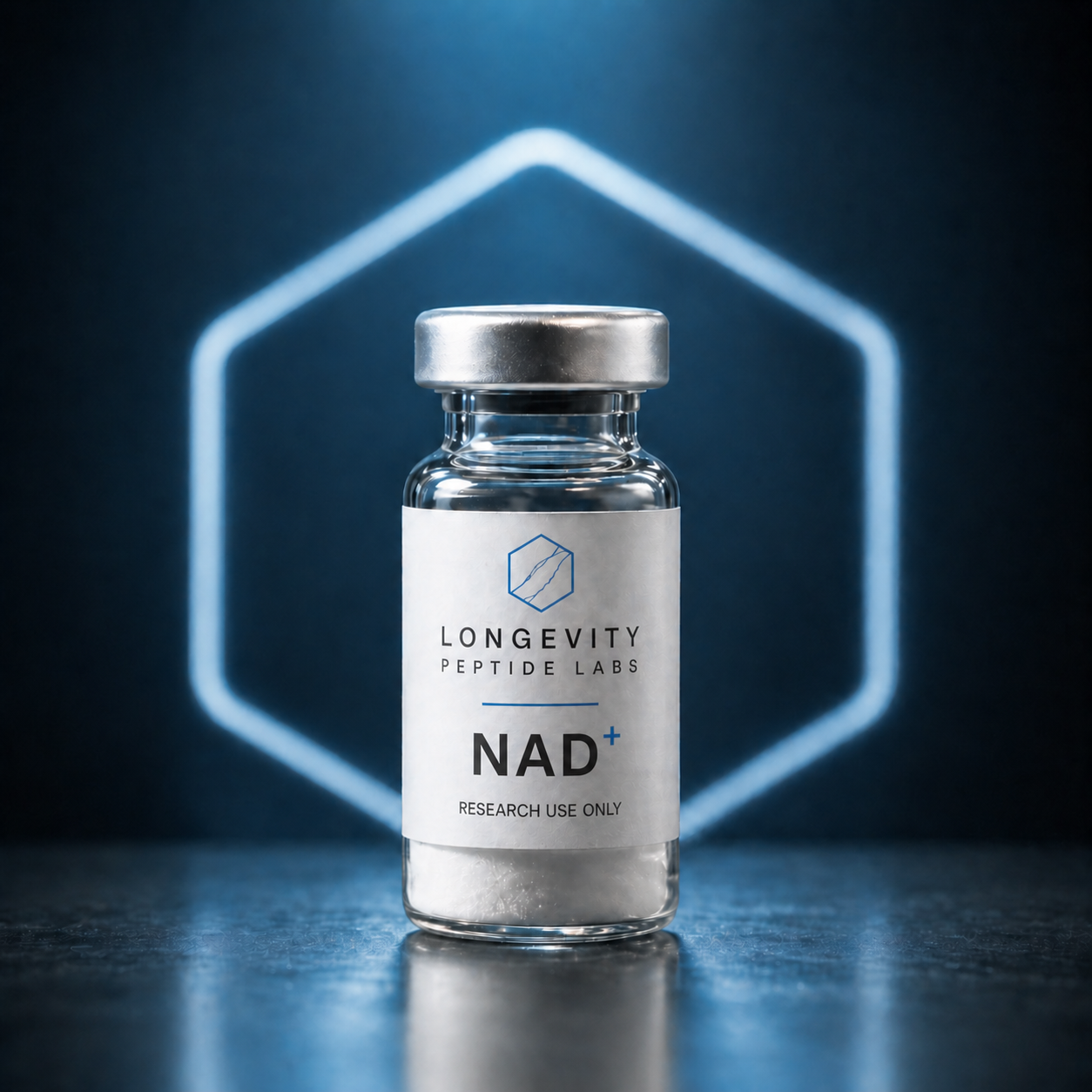
NAD⁺ (Nicotinamide Adenine Dinucleotide) is a naturally occurring coenzyme found in all living cells, playing a central role in cellular energy metabolism, redox reactions, and mitochondrial function. It exists in two forms: the oxidized form (NAD⁺) and the reduced form (NADH). NAD⁺ is a crucial component of pathways such as glycolysis, the citric acid cycle (TCA cycle), and oxidative phosphorylation, where it facilitates the transfer of electrons and supports ATP production. In research settings, NAD⁺ is widely used to investigate metabolic regulation, aging biology, sirtuin activity, DNA repair, and redox balance in cells.
In laboratory environments, NAD⁺ is typically supplied as a white or off‑white crystalline powder that is highly soluble in water. The compound can be used in biochemical assays, cell culture studies, enzyme kinetics experiments, and metabolic profiling. Researchers may use NAD⁺ to modulate metabolic enzymes or to study pathways involving NAD⁺‑dependent dehydrogenases, sirtuins, and PARPs (poly‑ADP‑ribose polymerases).
Quality and purity are critical for meaningful experimental results. Research‑grade NAD⁺ is usually produced to high purity standards (≥ 98%) and verified by analytical techniques such as High‑Performance Liquid Chromatography (HPLC) or Mass Spectrometry (MS) to confirm composition and minimize contaminants.
For storage, NAD⁺ powder should be kept in a cool, dry place, protected from light and moisture. Opened powder is often stored at 2°C to 8°C (refrigerator) for stability, though long‑term storage is typically recommended at ‑20°C or lower. Solutions of NAD⁺ prepared for experiments should be used promptly, stored cold, and protected from repeated freeze/thaw cycles, which can degrade the compound.
Research suppliers usually provide a Certificate of Analysis (COA) with NAD⁺, confirming purity percentage, identity verification, molecular weight confirmation, and storage recommendations along with batch/lot information for traceability. NAD⁺ is intended strictly for laboratory research use and is not FDA‑approved for clinical or therapeutic applications. It is commonly used in studies of metabolism, aging, energy biology, and enzymatic processes where NAD⁺ is a key biochemical regulator.