Call Now (561) 414-0653 Call Now (561) 414-0653 Call Now (561) 414-0653
Fast delivery within 24 to 48 hours. Fast delivery within 24 to 48 hours. Fast delivery within 24 to 48 hours.

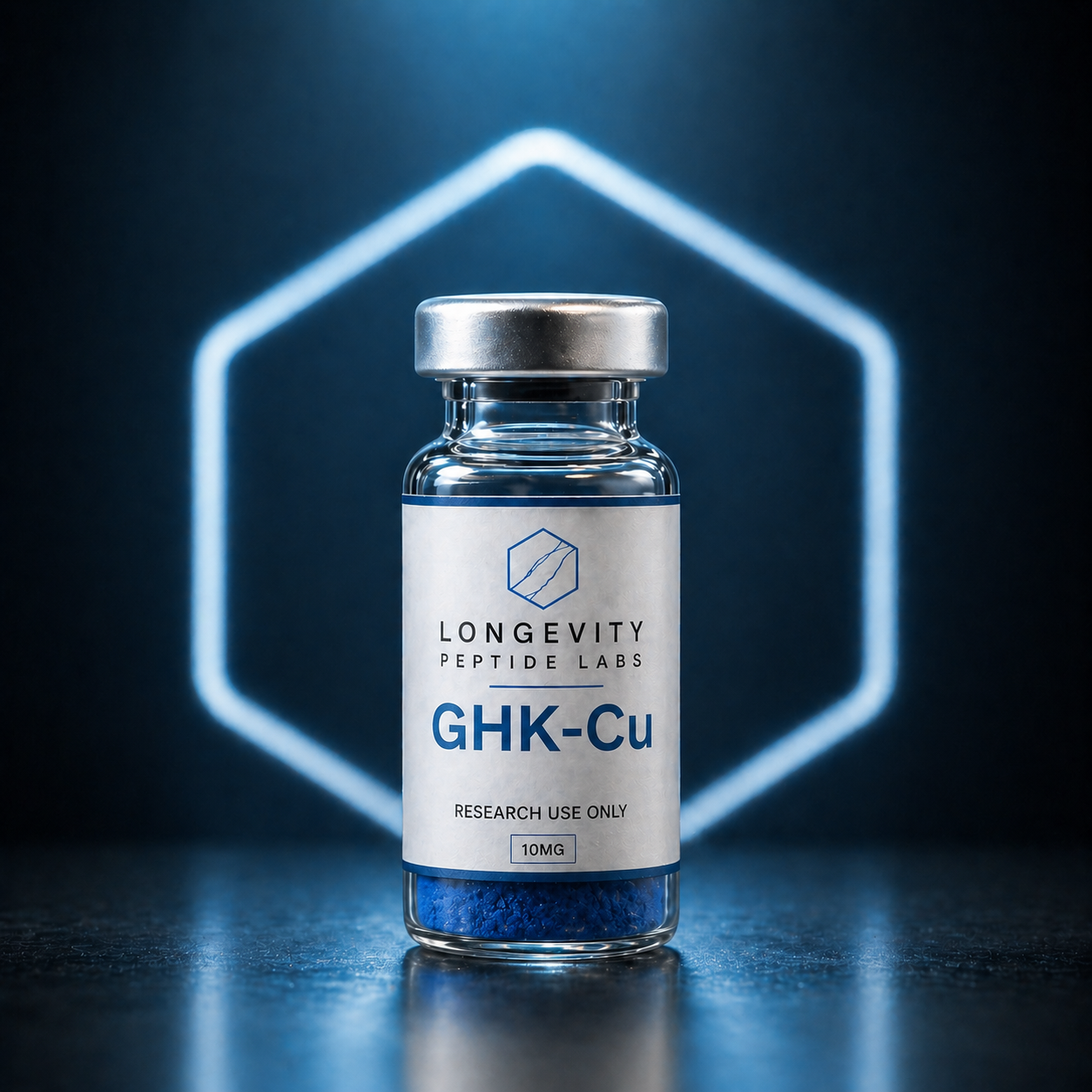
GHK‑Cu (Copper Peptide)

Price range: $89.00 through $129.00

Scientific Overview

  • Peptide Type: Tripeptide Gly‑His‑Lys with copper (Cu²⁺)

  • Molecular Weight: ~404.3 Da (including copper ion)

  • Purity: Typically ≥ 95%, verified by HPLC

  • Form: Lyophilized powder

  • Storage:

    • Unopened: Store at ‑20°C or lower

    • Reconstituted: Store at 2°C to 8°C (refrigerator)

    • Avoid freeze/thaw cycles

  • COA: Includes batch number, purity, identity, molecular weight, and storage instructions

  • Use: For research purposes only, not FDA-approved for clinical use

Please Note: These products are intended strictly for laboratory research purposes only. They are not for human consumption, medical use, or veterinary application.
Disclaimer: If multiple different peptides are purchased, they must be injected separately. Mixing them in the same syringe can alter the pH balance, which may cause adverse side effects.

COA Verified

Trusted medications

Licensed Pharmacy

Certified & regulated

Secure Checkout

Protected payments

Fast Delivery

24~48 hours

Related Items

GHK‑Cu (Copper Peptide) is a naturally occurring tripeptide made up of the amino acids Glycine‑Histidine‑Lysine bound to a copper (Cu²⁺) ion. It is widely studied in laboratory research for its biological roles in tissue repair, inflammation modulation, collagen synthesis, and cellular signaling pathways. GHK‑Cu has gained interest in regenerative biology studies because it appears to influence gene expression, promote extracellular matrix formation, and support cell proliferation in experimental models.

In research settings, GHK‑Cu is typically supplied as a white to off‑white lyophilized (freeze‑dried) powder. Before use in experiments, the peptide is reconstituted with a suitable sterile solvent (e.g., sterile water). Analytical testing such as High‑Performance Liquid Chromatography (HPLC) or Mass Spectrometry (MS) is used to confirm the purity and identity of the compound, and the peptide is generally produced to high purity standards suitable for laboratory research.

For storage, GHK‑Cu should be kept in a cool, dry place. The unopened lyophilized powder is typically stored at ‑20 °C or lower to preserve stability. Once reconstituted, the peptide solution should be kept in the refrigerator (2 °C to 8 °C) and used within the timeframe recommended by the supplier, while avoiding repeated freeze/thaw cycles to maintain integrity.

A Certificate of Analysis (COA) is usually provided with GHK‑Cu, confirming important quality parameters such as purity percentage, peptide identity, molecular confirmation, and storage recommendations, along with batch/lot information. GHK‑Cu is intended strictly for laboratory research use and is not FDA‑approved for clinical therapy, human consumption, or veterinary applications. It is commonly used in studies investigating tissue regeneration, wound healing, and cellular signaling pathways at the molecular and cellular level.

  • Peptide Name: GHK‑Cu (Copper Peptide)

  • Peptide Sequence: Gly‑His‑Lys (with a bound Cu²⁺ ion)

  • Peptide Type: Tripeptide‑metal complex

  • Molecular Weight: ~340.8 Da (peptide alone) + copper ion (~63.5 Da)

  • Form: Lyophilized (freeze‑dried) powder

  • Appearance: White to off‑white crystalline powder

  • Intended Use: For laboratory research purposes only

  • Typical Purity: ≥ 95–99%, depending on the quality grade

  • Verification Methods:

    • High‑Performance Liquid Chromatography (HPLC)

    • Mass Spectrometry (MS)

  • Purity and identity confirmation are documented in the Certificate of Analysis (COA)

  • Unopened (Lyophilized):

    • Store in a cool, dry place

    • Long‑term storage recommended at ‑20 °C or lower (freezer)

  • Reconstituted Solution:

    • After mixing with appropriate sterile solvent (e.g., sterile water)

    • Store at 2 °C to 8 °C (refrigerator)

    • Use within the timeframe specified on the COA or label

    • Avoid repeated freeze/thaw cycles to prevent degradation

  • Unopened (Lyophilized):

    • Store in a cool, dry place

    • Long‑term storage recommended at ‑20 °C or lower (freezer)

  • Reconstituted Solution:

    • After mixing with appropriate sterile solvent (e.g., sterile water)

    • Store at 2 °C to 8 °C (refrigerator)

    • Use within the timeframe specified on the COA or label

    • Avoid repeated freeze/thaw cycles to prevent degradation

Call Us Now